
Structural drying is a science governed by vapor pressure, airflow, and temperature. We monitor environmental conditions daily to create a drying vortex that draws moisture out of porous construction materials without causing secondary warping.
Scientific Psychrometric Structural Drying Across Ogden & Weber County
In Northern Utah’s distinct climate, structural drying requires precise environmental calibration. At Ogden’s elevation of approximately 4,300 feet, atmospheric pressure and humidity levels fluctuate dramatically between winter valley inversions and hot, arid summers. Simply opening windows or placing household fans frequently backfires: in winter, cold outdoor air cannot absorb evaporated moisture, while in summer, rapid unmonitored surface drying can trap moisture deep inside wooden studs, leading to subterranean dry rot and hidden fungal colonization.
Many homes in Ogden, particularly throughout the Historic 25th Street corridor, the East Central district, and near Mount Ogden Park, feature heritage architectural materials such as multi-wythe brick, lath-and-plaster wall assemblies, and dense Douglas fir framing. These dense structural components hold capillary water tenaciously. Our certified technicians apply advanced psychrometric science—controlling the thermodynamic interplay of ambient temperature, relative humidity (RH), and grains per pound (GPP) of moisture—to pull bound water safely out of historic framing, modern OSB subfloors, and concrete foundations.
What Professional Structural Drying Includes
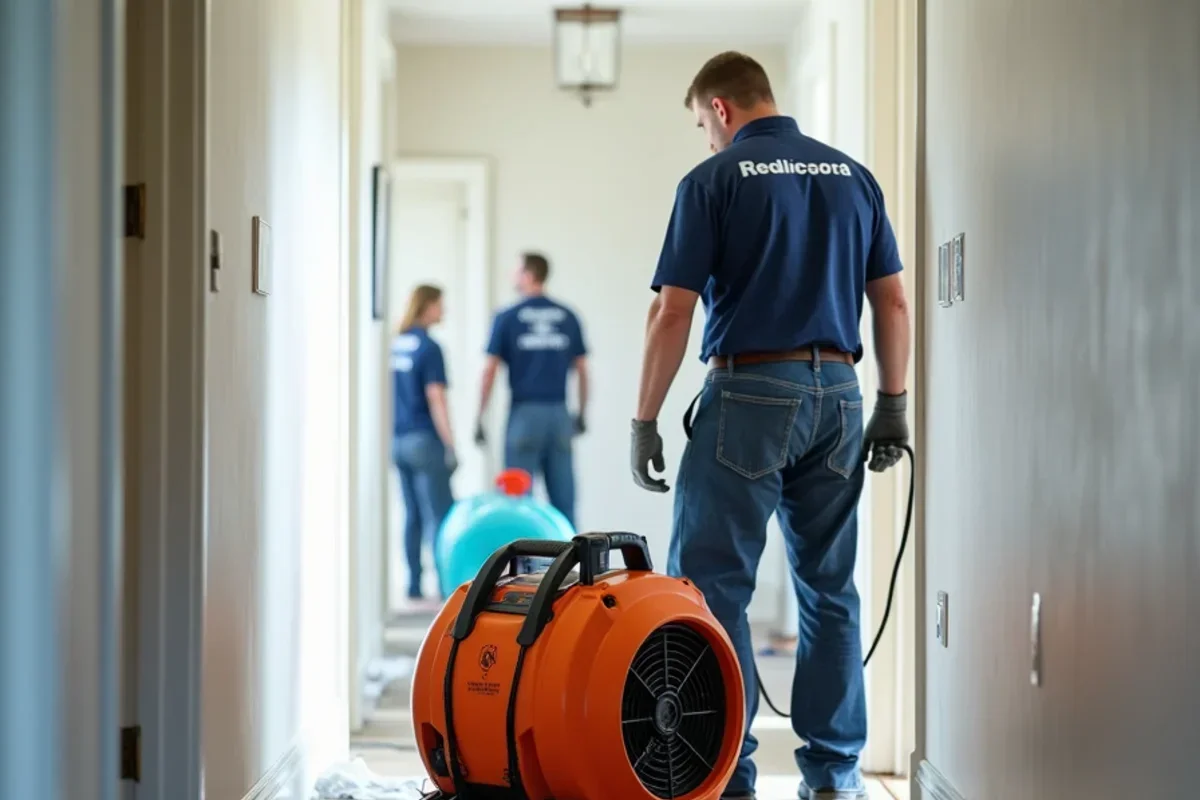
Controlled structural drying ensures that every concealed layer of your building envelope returns to equilibrium moisture content before reconstruction starts. Our comprehensive structural drying services include:
- Commercial LGR & Desiccant Dehumidifier Deployment: High-efficiency low-grain refrigerant (LGR) and desiccant dehumidifiers capable of removing up to 150 pints of moisture per day even at low grain levels.
- High-Velocity Air Mover Vortex Arrays: Strategic positioning of centrifugal and axial air movers along baseboards and floor assemblies to strip away the boundary layer of saturated, stagnant air.
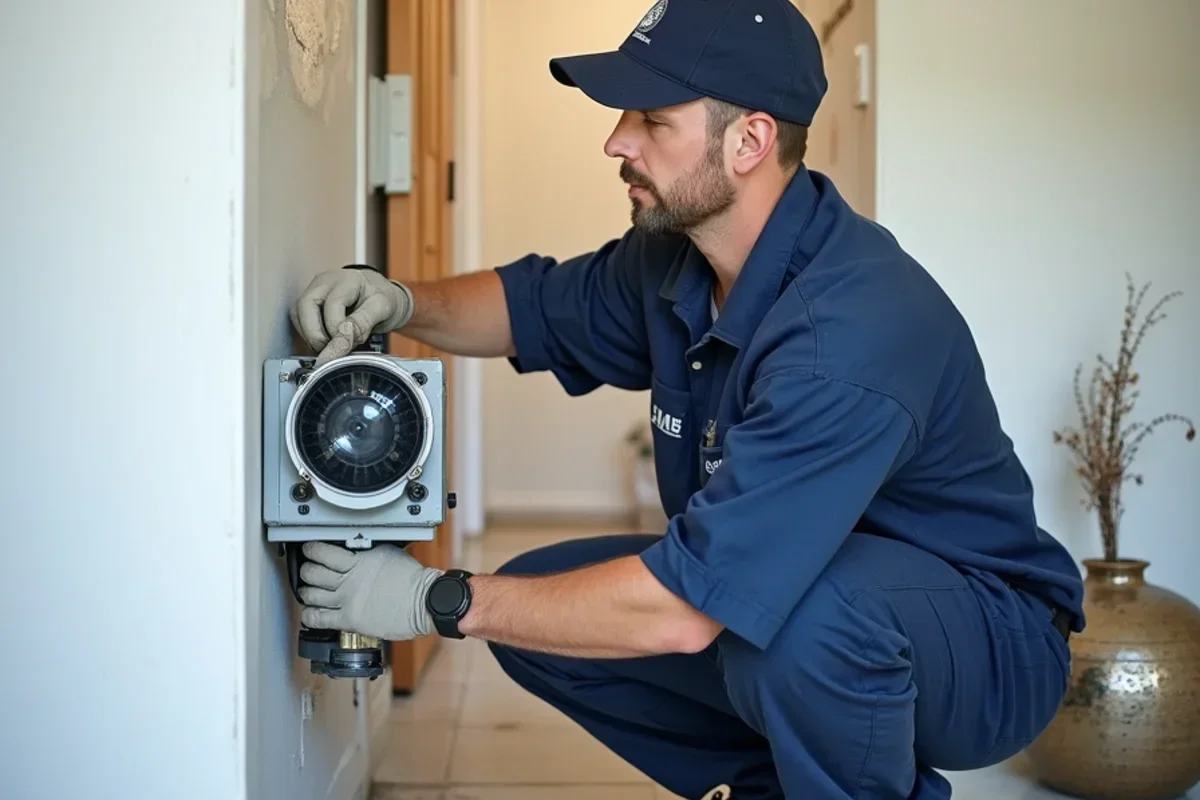
- Specialized Wall Cavity Injection Drying: Non-invasive drying systems that inject heated dry air directly into wet wall cavities through tiny baseboard holes, preserving drywall and wall framing in place.
- Hardwood Floor & Subfloor Vacuum Mat Systems: Targeted negative-pressure floor mats that extract bound liquid moisture out of tongue-and-groove hardwood planks, reducing cupping and buckling.
- Daily Psychrometric Moisture Logging: Daily job-site visits by certified technicians to measure and document grains per pound (GPP), relative humidity, ambient temperature, and dew point.
- Non-Destructive Moisture Content Verification: Calibrated digital pinless moisture meters and deep-penetrating hammer probes measuring exact moisture percentages inside wooden studs and subfloors.
The Physics of Moisture Migration in Northern Utah Structures
When water penetrates building materials, it exists in two distinct forms: free surface water and bound hygroscopic water. Free water rests on surfaces or within open pores and is easily extracted with vacuum equipment. Bound water, however, is absorbed directly into the cellular structure of wood fibers, gypsum cores, and concrete pores, held by strong intermolecular bonds.
To extract bound water, technicians manipulate vapor pressure. By driving down the vapor pressure of the surrounding indoor air using industrial dehumidifiers, a high vapor pressure gradient is created between the wet structural members and the dry air. Moisture naturally migrates out of the wood and drywall toward the lower pressure in the room, where commercial dehumidifiers condense the vapor into liquid water and pump it out through continuous discharge lines.
Without this scientific balance, unmonitored structural materials remain damp for weeks. When wood framing exceeds 16% to 19% moisture content in an unventilated wall cavity, wood-decaying fungi, structural warping, and aggressive mold spore germination occur rapidly, compromising structural integrity.
Our 5-Step Controlled Structural Drying Protocol
In strict compliance with the ANSI/IICRC S500 Standard for Professional Water Damage Restoration, our technicians execute a rigorous 5-step structural drying workflow:
- 1
Initial Moisture Mapping & Dry Standard Baseline
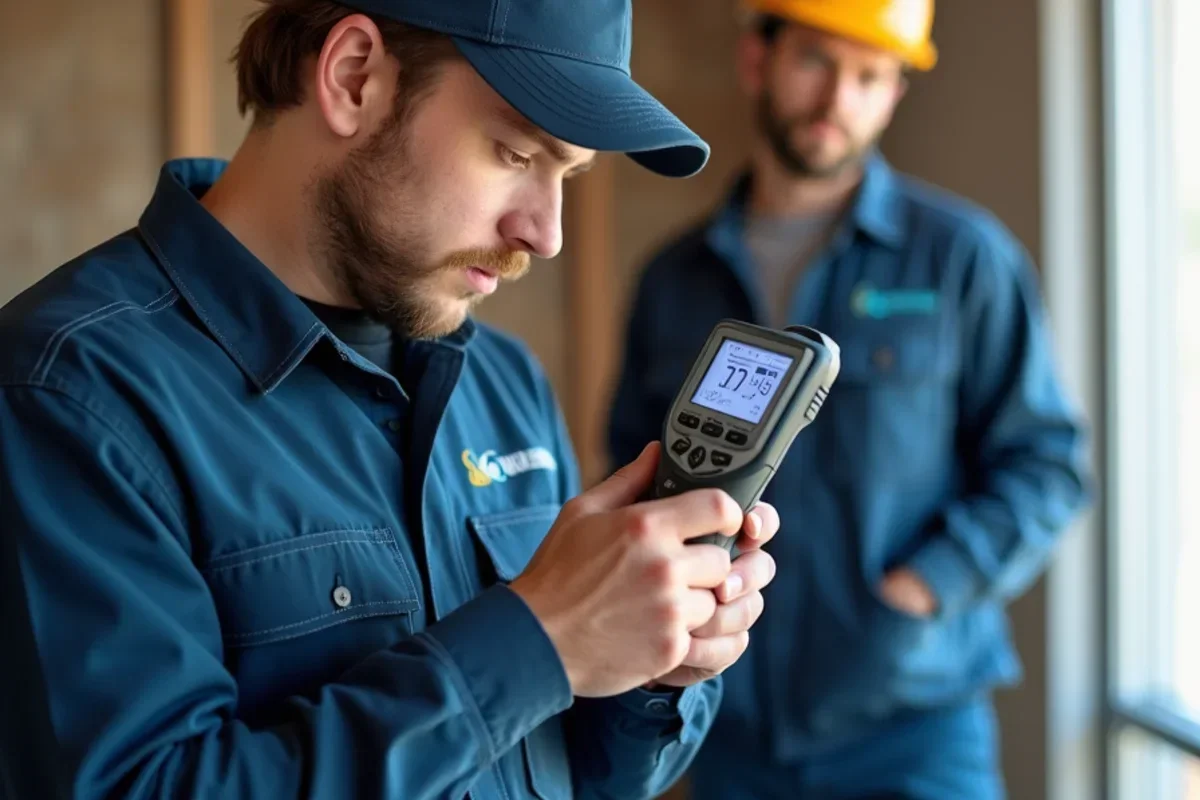
Technicians use infrared cameras and digital moisture meters to outline all wet structural areas. We record baseline moisture readings from unaffected wood and drywall in a dry room of your home to establish exact dry targets.
- 2
Strategic Airflow Vortex Setup
We position high-velocity axial and centrifugal air movers at 45-degree angles along perimeter walls. This laminar airflow strips the stagnant moisture boundary layer from saturated surfaces, accelerating liquid evaporation into the air.
- 3
Industrial Dehumidifier Placement & Sizing
Using IICRC cubic-footage calculation formulas based on the water category and saturation class, we calculate the required pints-per-day extraction capacity and install commercial LGR dehumidifiers.
- 4
Daily Thermo-Hygrometer Monitoring & Equipment Optimization
Technicians inspect your property every 24 hours. We test ambient air, exhaust air, and structural moisture content, adjusting air mover angles and dehumidifier positions as materials dry.
- 5
Equilibrium Moisture Content (EMC) Verification & Final Clearance
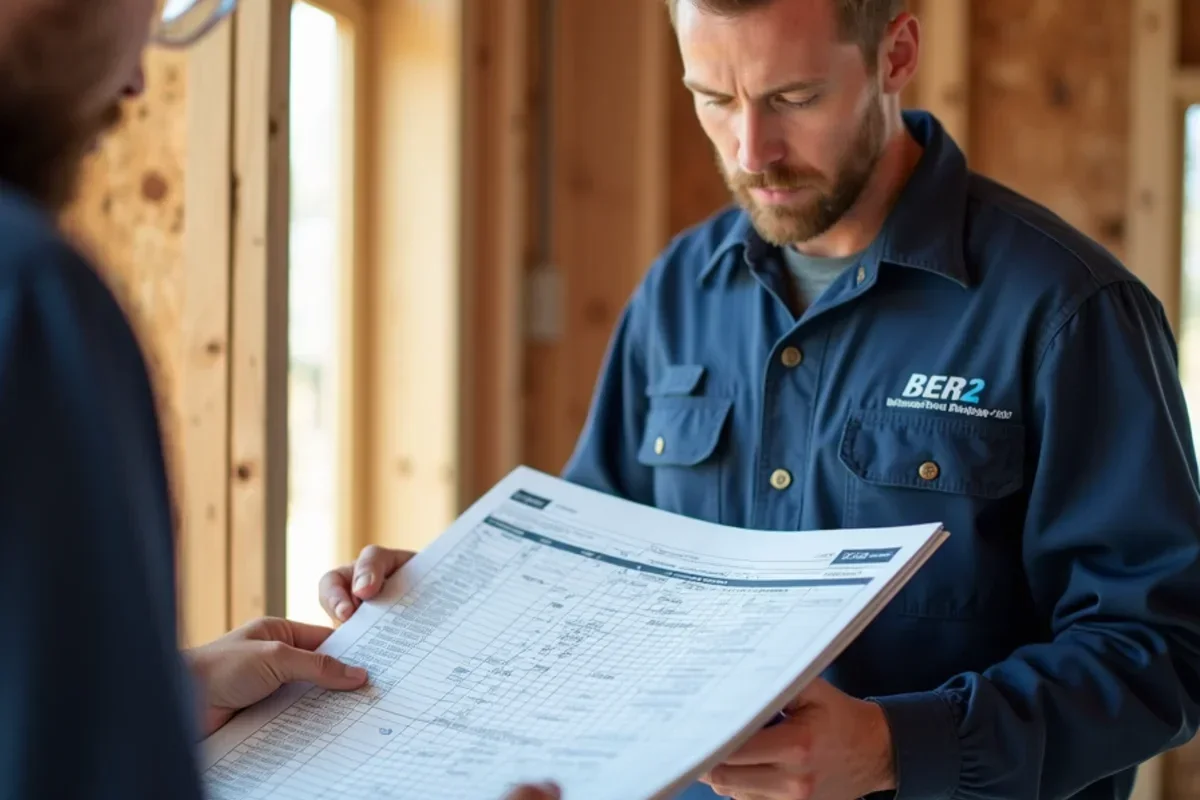
Equipment remains active until every structural member reads within 2% to 4% of the established dry standard. We compile a certified drying log report for your insurance carrier.
24/7 Water Damage Emergency? We Are on Call Right Now
Speak directly with our Ogden restoration dispatchers. We arrive within the hour across Weber County with industrial water extraction pumps and rapid structural drying equipment.
- 5★ on Google (4 reviews)
- 24/7 Live Dispatch
- 60-Min Emergency Arrival
- Fully Insured
- Free Assessments
- Serving Ogden & Northern Utah since 2023
Factors Influencing Structural Drying Costs in Ogden
The cost of structural drying is determined primarily by the volume of commercial drying equipment required, the density of affected materials, and the duration of continuous runtime. In Ogden and Weber County, localized structural drying for a single room with minor drywall or flooring saturation typically ranges from $500 to $2,600. Multi-room structural drying involving saturated subflooring, insulated wall cavities, or commercial desiccant setups generally ranges from $1,500 to $4,800.
Standard structural drying cycles require 3 to 5 days of continuous operation. Our line-item billing strictly follows standardized Xactimate insurance pricing guidelines, ensuring seamless reimbursement and direct carrier coordination without unexpected out-of-pocket surprises.
Utah Contractor Licensing & Energy Code Standards
Professional structural restoration must adhere to Utah Division of Occupational and Professional Licensing (DOPL) contractor standards and local municipal electrical safety guidelines. High-volume drying equipment draws substantial electrical amperage. Our technicians calculate circuit capacity to ensure equipment operates safely on dedicated 15-amp and 20-amp residential circuits without overloading electrical panels or creating fire risks.
When wall cavity drying requires minor access penetrations behind baseboard trim, all work is performed in accordance with Ogden City building guidelines to preserve building envelope vapor retarders and thermal insulation values.
Why Choose Ogden Mold Removal Solutions for Structural Drying?
We combine scientific precision with heavy-duty commercial equipment to protect your home’s structural integrity:
- Certified IICRC Drying Specialists: Fully trained in ANSI/IICRC S500 standards, ensuring psychrometric calculations and dry verifications are unimpeachable.
- Advanced LGR & Desiccant Fleet: Industrial drying machines capable of pulling deep moisture out of stubborn materials like concrete and historic plaster.
- 24/7 Rapid Emergency Dispatch: 60-minute on-site arrival capabilities throughout Ogden, Roy, West Haven, North Ogden, and South Ogden.
- Downtown Ogden Headquarters: Centrally based at 189 25th St, Ogden, UT 84401, providing immediate local response.
- 5.0-Star Google Customer Track Record: Authentic 5-star customer reviews verifying our promptness, communication, and meticulous documentation.
Structural Drying & Dehumidification — Frequently Asked Questions
- Under typical northern Utah conditions, structural drying requires 3 to 5 days. Even with low outdoor humidity, dense structural materials like timber studs, subfloors, and concrete slabs release bound moisture slowly and require continuous dehumidification to avoid surface trapping.